Friday, 9 May 2014

Blog neglection excuses


I've been neglecting my blog again, tsh! There has been lots of exciting news in my life lately, but this has also accompanied by stress, and with so much on my mind I have not had the will to write.

Firstly I had the fantastic news that I was offered a place on the PhD I was interviewed for as the first choice candidate declined in favour of another offer. I accepted with little hesitation! The project title is Statistical modelling of how soil biodiversity and ecosystem function respond to human impacts in UK ecosystems, hosted at the Imperial College London Grantham Institute for Climate Change and working with the research groups PREDICTS and Soil Biodiversity Group at the Natural History Museum. This will use the huge unpublished datasets from the SBG to model how soil invertebrates respond to human impacts including climate change but there will be also be opportunities to collect new data - which will hopefully include some soil diptera larvae studies!

Secondly I accepted a job offer at Reading University which I began nearly a month ago. This is working as a field assistant at CAER with PhD student Chloe Hardman. She is researching biodiversity on farms using different agro-environment schemes, were farmers are paid for various activities which are supposed to increase biodiversity. Specifically I am helping with research on pollen and nectar sources on farms (i.e. flowers!) and pollinators. This involves fieldwork walking transects in different habitats across 12 farms in Southern England, recording bees, hoverflies and plants. It is wonderful to be making a living doing fieldwork identification skills after years of working inside an office! Together with my PhD offer I still can't quite believe how well my academic life is going at the moment, and keep thinking I will wake up from a dream!

2014-04-15 09.59.56

My working conditions have improved greatly!

This Wednesday was my MSc graduation ceremony, I felt a little decadent going to another after my BSc one but the venue was the Royal Albert Hall in London so I couldn't pass up an opportunity to go there. My parents attended too so we decided to make a day of it, using the complimentary tickets I receive from volunteering at the Natural History Museum to visit the butterfly exhibition. It was fortuitous that the same day Paul was giving a Nature Live talk on the NERC BESS earthworm project which I have been volunteering on, which I dragged my parents along to see. Today I finished 'my' half of the samples and just in time as I will soon be returning to my MSc study site on the Isle of Wight to carry out more research there.

IMG_0452 - Copy

It’s going to be busy summer (indeed a busy four years are ahead!)

Friday, 14 March 2014

My Listserve experience

The Listserve is an e-mail lottery were one person a day wins a chance to write to
the growing list of subscribers. I was fortunate enough to win the lottery on the 8th March and while I toyed with the idea of writing an email on earthworms(!) I thought it would be more interesting for people to hear my experiences with Asperger's diagnosis. Two days later my message was sent out across the world and I have had an amazing response from it and it will take a while to go through and reply to all the messages. Below is my message in full:

My motivations for joining the Listserve were part of my drive to communicate more with 'the world' and coincided with starting a blog (Science on the Spectrum) were I aim to discuss my scientific career aspirations through the lens of autistic spectrum disorder (ASD). I was diagnosed with Asperger Syndrome in 2012, a 'higher functioning' form of autism. This affects how a person makes sense of the world, processes information and relates to other people but because I am intelligent and outwardly appear capable, these disabilities are largely hidden. I have difficulty with the subtleties in verbal communication, such as understanding facial expressions and voice tone and knowing what people are thinking, explaining the problems I have experienced in interacting with others throughout my life. It is not all disadvantageous though, my condition is also associated with obsessive interests, a high attention to detail and love of pattern recognition which are valuable attributes for a career in science. It is therefore no surprise that those 'on the spectrum' are overrepresented in STEM (science, technology, engineering and mathematics) and that I should be drawn to this career from an early age.

It is not until recently that ASD has received more awareness and it was the opening of a clinic in my local area that prompted me to consider being officially diagnosed. It was not a decision I took lightly, as I was unsure whether having a 'label' would be a help or hindrance from a personal and career perspective. However I was applying for a full time Master of Science degree which would necessitate moving to London and having to live independently rather than rely on my parents' care and a diagnosis would give me access to support. I researched the experiences of others and discussed it with my family and General Practitioner/family doctor before deciding it was worth pursuing.

Since my diagnosis my attitude to my difficulties has changed, instead of constantly feeling inadequate for my social failings, for example when I attend a conference but am too scared to talk to many people it instead feels an achievement to have gone at all. Rather than a burden, I see my difficulties as a challenge to overcome and to that end decided to stop letting the fear of other people hold me back and 'feel scared but do it anyway'. With support from my family and the university's disability team, last year I achieved my ambition to gain a Master of Science studying at the Natural History Museum in London where I have continued to volunteer on a research project on earthworms - but that is another story!

I would be interested to hear the experiences of other STEM workers with autistic spectrum or other communication disorders.

Friday, 28 February 2014

Return of the worm

I kept going back to that Lumbricus sp. that I was stuck on after my last garden earthworm foray, and after segment counting over and over it still kept coming out as L. festivus, an uncommon species. With some trepidation (not least because I had just volunteered to help with earthworm identification) I brought it into the Soil Biodiversity Group laboratory at the Natural History Museum for Dr David Jones to check. To my delight and relief my identification was correct bringing my garden earthworm species list to nine.
 
Lumbricus festivus
The (half of) Lumbricus festivus I found in the garden

As mentioned, since I now have a wage and days off during the week I have been able to return to volunteer with the Soil Biodiversity Group helping to sort and identify the earthworms sampled on the NERC BESS project. With my Christmas money I bought my own copy of Sims and Gerald and am learning more advanced skills in earthworm identification, with David pointing out features and giving tips on identification when the key cannot be used, like the headless Octolasion cyaneum in the first sample I looked at.
 
Sorting and identifying NERC BESS earthworm samples

I like to start by picking out all the immature worms, for the most part these cannot be identified to species but they can be assigned to an ecotype which can still be analysed, for example any pale coloured immature earthworms are the soil feeding endogenic type. Next I move on to the damaged worms, which can be a bit of a ‘worm jigsaw’, sometimes it is possible to identify them to species if enough features are still present. Then it is on to species level identification, so far I have identified eight species from two of the fields at the Aberdeen site. The most frequent species was Aporrectodea caliginosa; I have identified 162 in ‘my’ two fields so it is exciting when something else turns up!
 
Yet more Aporrectodea caliginosa

I have also ‘met’ some species under the microscope for the first time, including the UK’s biggest earthworm species – Lumbricus terrestris, and at the opposite end of the scale the little L. castaneus. I will be in once a week identifying earthworms and looking forward to meeting more species as the samples go on.

Lumbricus terrestris awaits inspection under the microscope


Wednesday, 26 February 2014

Interviews, PhDs and other scary things…


There has been a bit of a hiatus in my blogging since I have been extra stressed while planning what to do next in both the short and medium term. My first priority was to find some paid work, not only for financial reasons but because I need structure in my life and to keep busy in order to stay mentally well. Ideally I wanted something with a day off during the week so I could continue volunteering with the Soil Biodiversity Group and had the good fortune to land a temporary administrative role that filled this. Being a temp also gives me the freedom to take days off if I require them for interviews for other positions and PhDs which takes a lot of pressure off me. My first administrative position interview in 7 years was a challenge and I did find it difficult to adjust back to the working life after a year studying. My next aim was to find some paid research assistant work over the summer and a place on a PhD in the autumn.

On top of the stress of starting a new job I have applied for two doctoral training programmes and have had an interview for one so far. This was with the Imperial College London SSCP for a project based in the PREDICTS lab at the Natural History Museum which would include using data from the Soil Biodiversity Group. I was a little hesitant in applying because although the prospect of a large scale data analysis project on soil organisms was exciting, statistics are not my strong point. However I reminded myself that a PhD is a training as well as a research programme and in any case practice in applying and being interviewed for the position would be useful for me.

I was very nervous during the interview and afterwards concerned I did not do my best but feedback from the interviewers was largely positive. I was particularly encouraged that my eye contact during the interview was good as I have been working hard to improve that. The outcome of the interview was that I was placed second, a result which before my course of cognitive behaviour therapy I would have been distressed by. Instead, I reflected on how much of an achievement it was for me attending the interview, and how a few years ago I would not have been able to do that.

This was a big confidence boost for the two research/field assistant positions I had interviews for recently which to my delight I was offered both. The support I have received from members of the Soil Biodiversity Group during my applications and interviews has been so encouraging, they genuinely believe I am capable of achieving PhD and most importantly for the first time in decades I do too. So I will keep reminding myself of Paul’s words: “just keep doing what you are doing and you’ll get there”.

Sunday, 5 January 2014

Garden earthworm bothering part 2: identification


So how do you go about identifying an earthworm? Firstly in most cases your earthworm needs to be an adult, mature earthworms have a saddle (clitellum) which is part of the reproductive system – forming a cocoon which protects the earthworm’s eggs. Unfortunately only five of the earthworms collected from my garden survey were adults so the rest went back into the garden unidentified.

Lumbricus sp.

There are 27 species of earthworm in the UK, some of which, like the Eisenia fetida I found in the compost heap, can be identified in the field, for these you can use the free OPAL Earthworm Guide or online key but others require close examination using a microscope and an identification key. The ‘bible’ for UK earthworm identification is Sims and Gerard (1999) but as Father Christmas was not kind enough to bring me a copy I used Sherlock (2012). This key is published by the Field Studies Council and is part of their excellent AIDGAP (Aid to Identification in Difficult Groups of Animals and Plants) series, it is a perfect step up from the OPAL guide and I highly recommend it - if you join the Earthworm Society of Britain you will receive a copy in their recording pack.

worm3
Earthworm underside showing some features used in earthworm identification

By now I have seen a fair few earthworms so I was reasonably confident without using a key that my two from the soil pits were in the genus Lumbricus, these tend to be dark in colour and often iridescent, but it is good practice to check. In the FSC key Lumbricus and one other genus are separated in the first couplet by the structure of their head. At the head of the worm is a fleshly lobe or prostomium which covers the mouth, in some worms two lines run from the prostomium so from the top it looks like the first segment is split into three, this is known as a tanylobic head and is the type found in Lumbricus (the other type is called epilobic).

Top view of Lumbricus head and clitellum showing iridescence
Top view of earthworm head and clitellum (note the iridescence)

The next step is to count the number of segments before the clitellum and how many segments the clitellum covers. This can be quite tricky and I find it particularly difficult on the clitellum were the segments are not as distinct. Unfortunately this was the case with my two specimens so for now I will have to leave them at Lumbricus sp. until an expert at the museum can help me with them, such is the way with identification, especially when you are learning, but with my perfectionist nature I still find this hard to deal with.

Thankfully my confidence was restored by being able to identify the two species I found underneath my log pile, these were both epilobic worms.

Aporrectodea caliginosa showing epilobic type head

Other characters used in earthworm identification are the position and shape of the tubercula pubertatis (TP for short) which are a pair of raised pads on the side of the clitellum, both my worms from the log pile had distinctively shaped TPs which I recognised from earthworms identified during my MSc project. The larger pale specimen had two bumps on segments 31 and 33 so I recognised it as Aporrectodea caliginosa, one of the most common UK earthworms. The bumps can sometimes be so prominent they can be seen without a microscope.

The distinctive two bumps on the TP of Aporrectodea caliginosa
The distinctive two bumps forming the TP of Aporrectodea caliginosa

The other two worms were much smaller and dark red in colour with a crescent shaped bump on the TP which I recognised as belonging to Satchellius mammalis, the 5th commonest species I found in my MSc study site.

Satchellius mammalis
The crescent-shaped bump on the TP of Satchellius mammalis

So with just an hour in the garden and I already have 4 or 5 earthworm species ready to submit to the Earthworm Recording Scheme. Why not have a go yourself? For such an ecological important group earthworms are terribly under-recorded and with just a small number of species with good identification keys and reasonably clear identification features they are a nice group to 'do'.

Wednesday, 1 January 2014

Garden earthworm bothering part 1: sampling


I have sulking at home since the Soil Biodiversity Group earthworm fieldwork ended so between Christmas and the New Year I decided to get out into the garden and hunt for earthworms - one of the great things about earthworms is that they are active even during winter so long as the ground is not frozen. There was some difficulty in that my sister had borrowed the spade so I had to make do with a fork and trowel, not ideal for making neat soil pits. Also, my ‘assistant’ who was curious to what I had been up to in fields these past weeks turned up without his warm clothes and waterproofs so it ended up being a rather brief survey which I will continue in the New Year.

Image00001
Andrew, my somewhat reluctant ‘assistant’ Quote: “You did this all day in a field!? Would drive me round the bend”

Garden earthworm survey - pouring the mustard solution
But despite this I did let him pour the mustard solution

I used the standard method for earthworm surveys, details of which can be found on the Earthworm Society of Britain website. The first pit was dug in the scruffy bit of grass that passes for a lawn and I was surprised to find the soil was drier, less clayey and less compacted than I expected. It was also without structure, no layers of top soil and subsoil like I have been used to in the fields and woodland, just loose soil on top a layer of rubble – sadly typical of suburban soils - but there were still earthworms. Sadly the mustard solution did not produce any earthworms although I was not surprised as the soil is rather shallow and I have not seen many of the distinctive casts the anecic types make.

An earthworm in its burrow
An earthworm in its burrow in the soil removed from the lawn

Sadly the mustard solution did not produce any anecic earthworms although I was not surprised as the soil is rather shallow and I have not seen many of the distinctive casts they make on the lawn.The next pit was made in one of the raised vegetable beds and even this highly disturbed area produced five earthworms, although unfortunately all immature specimens which could not be identified to species. As we were losing daylight and Andrew was getting cold we had a quick look in some microhabitats rather than start another soil pit. As expected the compost heap produced lots of the Compost or Brandling Worm Eisenia fetida which lives in areas of high organic matter, it has a stripy appearance when moving and they exuded a unpleasant yellow fluid when handled.

Compost worm Eisenia fetida
A handful of Eisenia fetida

Under my log pile I found two small red worms and a larger pale pink one which along with the two adult earthworms from the soils pits were retained for identification. In part two I will go through the steps in identifying these earthworms.

Friday, 20 December 2013

Earthworms – the final chapter!


With the soil analysis laboratory in York shortly closing for Christmas the race was on to complete enough samples in each field and county for the statistician on the project to work his magic. The result was an epic 400 mile round trip to finish off sampling fields in Leicestershire, Berkshire and Dorset. It was just David and I who set off Sunday evening for Leicester, meaning that I was navigator (oh the pressure!), but on Monday we met up with Jo who is the technician at the University of York undertaking the soil analysis, to finish the final field in Loddington.

Dr David Jones and Jo sorting soil in Loddington, Leicestershire

Jo and David sorting soil (is David praying for the project to end?)

It was great to meet with Jo and find out about the soil analysis side of the project, at the moment she is working on the samples taken for the measurement of microbial activity since these need to be processed quickly for accurate results, later analysis will be done on particle size, pH, nutrient content and more. The method used by the lab is the fluorescein-diacetate (FDA) hydrolysis assay, enzyme activity from microbes in the soil sample cause the colourless FDA to break down into fluorescein which is a fluorescent yellow-green. The intensity of the colour is measured using spectroscopy and comparison with a standard determines the relative microbial activity of the sample.

Not unlike the earthworms Jo has found the microbial activity to vary greatly both between and within fields, from extremely high in the field in Yorkshire with the longhorn cattle to nearly ‘dead’ in one of the fields in Berkshire. Jo informed me that clayey soils are particularly difficult to process which I could sympathise with as they are also difficult to sort!

We made good progress despite being just the three of us, squeezing in an extra 11th sample which unfortunately had to be sorted in car headlights (again) and I made the tactical error of not taking my waterproofs off so ended up being volunteered to wander around a field in the dark to put the soil back in the hole.

Dr David Jones and Jo sorting soil in car headlights in Loddington, Leicestershire

Such dedication!

Loddington finished, Jo returned to York with the soil samples and David and I travelled south to Berkshire, returning to the lovely Dundas Arms, sadly too late for dinner but they did make us some amazing sandwiches. In the morning we were joined by Paul and Kelly and volunteers Cecilia and Alex, as a team of six we made brilliant progress and a super 21 samples were completed.

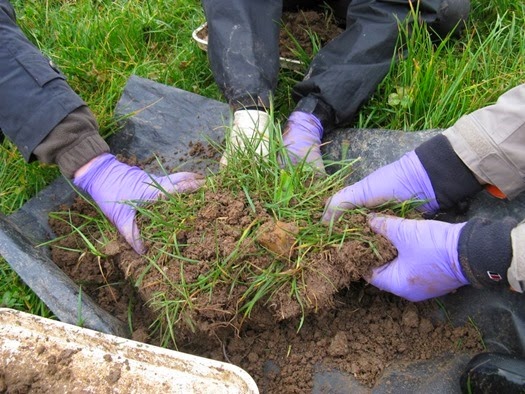
Kelly, David and Cecilia sampling earthworms in Berkshire

Kelly and David take the environmental variables while Cecilia prepares to sort
The Soil Biodiversity Group gets stuck into sorting another sample

The Soil Biodiversity Group gets stuck into sorting another sample

With still a few left to do in Berkshire next week the rest of the team went their separate ways while David and I travelled to Dorset. Thankfully this time we arrived in time for a pub dinner, nothing like two days of sandwiches for dinner to make me appreciate a hot meal! The next morning we met with the farmer of the final farm to find out about the management history of the fields and decide which would be suitable for the project. After picking up Paul from the train station we began sampling the penultimate field of the project.
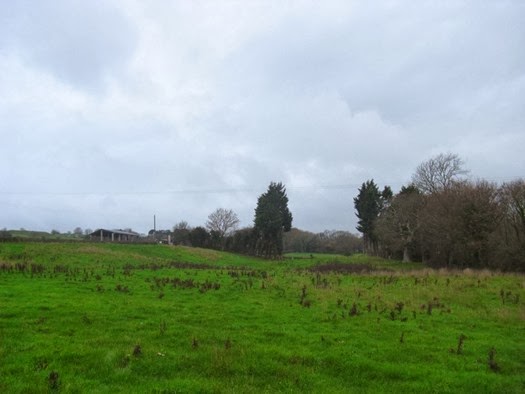
The penultimate field in the earthworm project

The penultimate field, the barn at the back would prove useful later in the week!

On Thursday we were joined by fellow project veterans Sholto and Irfaan to finish off the field in the quarry (no blasting this week sadly) and the other two fields. By Friday the weather was against us, but we maximised the work achieved by sorting in the barn during the heaviest rain and by dusk the required samples had been done!
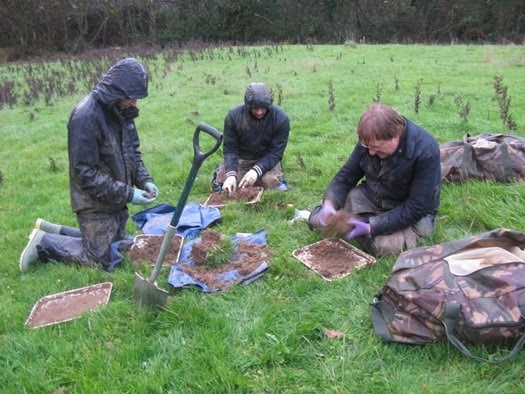
A wet and muddy Soil Biodiversity Group in the rain in Dorset

A very wet and muddy Sholto, Irfaan and Paul sorting in the rain in Dorset

All that remained was to finish the two fields in Berkshire so on Monday David, Paul and I met up again for the final day of sampling, two weeks and a day overdue! The fields were extremely wet, particularly (and not surprisingly) the one by the river, with one soil moisture reading at 100%. In the absence of a tap the stream proved useful for filling the mustard bottles, since they were to be used straight away the issue of bacterial contamination was avoided.

Dr David Jones makes up mustard solution

In the absence of a hotel or research centre to fill the mustard bottles, a stream will do


And now…

The final pit

And so finally the time had come, after 10 weeks of field work, the final pit was dug!

The final pit of the project

At last – the final pit!

Image00009

And Paul had the ‘honour’ of pouring the final bottle of mustard solution

Of course the project is not over, there are still thousands of earthworms to count and identify, soil samples to analyse, numbers to crunch, meetings to attend and papers to write, but my part is done. It has been a fantastic experience for me to be part of such an ambitious project. Being involved has given me a greater understanding of what is involved in research,  including the logistical and political aspects as well as the science. I have been reminded how much I enjoy field work, even in the rain and mud but most of all I reaffirmed my aspiration to be a researcher. I miss being in a muddy field but most of all I miss the interaction with like-minded people (wow, never thought I would say that!) – from discussion on scientific topics to intense debate on the merits of different biscuits. The New Year should bring more financial stability after my student life and so I hope to be able to visit the Museum once a week and continue volunteering with the Soil Biodiversity Group.

And so I offer a big thank you to everyone I worked with on the project, you have been an inspiration.